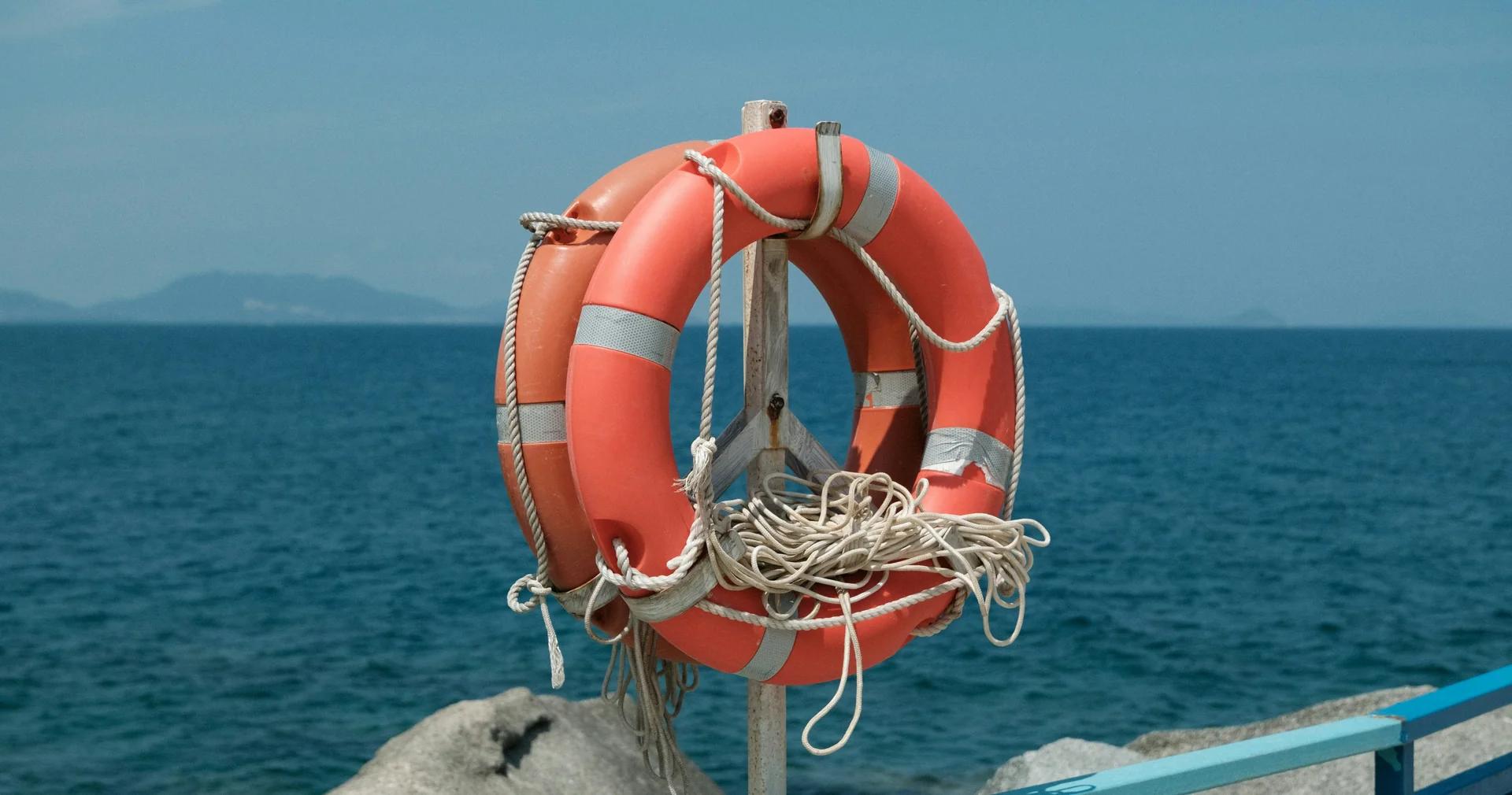
Flotation device
Wearing a flotation device: a simple gesture that can save many lives!
With this beautiful summer sun, isn't it tempting to enjoy a boat ride and feel the sea breeze? During an outdoor getaway, the choice of water activities is plentiful. Swimming, paddleboarding, boating — fun is definitely on the agenda.
However, since drowning is the 3rd leading cause of unintentional death among Canadians aged 60 and under*, both children and adults must exercise caution.
In other words, don't forget to put on your lifejacket or your Personal Flotation Device (PFD).
Legally, a vessel must carry a lifejacket or a PFD for each passenger. This law also applies to human-powered watercraft (sailboats, windsurfers, paddleboards, kayaks, etc.).
Of course, for the jacket to provide protection against drowning, simply having it on board the vessel is not enough. "About 90% of people who drowned as a result of recreational boating accidents were not wearing a lifejacket or a PFD" (Transport Canada, 2019a).
Yet about 25% of drowning victims are good or excellent swimmers. In other words, no one is safe from an accident.
Here are a few examples:
If the water is cold, the victim could suffer cold shock or hypothermia. A lifejacket or PFD can provide protection against these conditions.
During the fall, the victim may have become unconscious after hitting their head. Wearing a jacket or a PFD would then allow them to come back to the surface and float there until they regain consciousness or are rescued.
The victim can quickly be swept away by the current without having enough strength to swim back to shore or to the vessel. The jacket or PFD will help them stay at the surface and assume the correct position.
If you fall into whitewater and are swept away by the current, you must lie on your back with your head raised above the water. Knees and feet are slightly bent to "absorb shocks in case of obstacles. [Finally,] you must try to get closer to the shore by pulling water along the side of your body with your arms" (Lifesaving Society, 2019-2020).
Various weather events can occur suddenly without leaving enough time to return safely to port. For example, a thunderstorm with strong winds that creates large waves. Since this type of situation can be very dangerous, it is essential that every passenger wear their lifejacket or PFD.
In short, to significantly reduce the risk of an accident having serious consequences, it is crucial to make sure before leaving that there is a lifejacket or a PFD for each passenger and that they are all the right size.
Lifejacket or PFD — which one to choose?
Red, orange or yellow in color, lifejackets are equipped with reflective strips and generally include a whistle. This makes them easier to spot in the water.
More effective in terms of protection and buoyancy, this flotation device approved in Canada "allows the wearer to float with their head well above the water level. [It also] turns this person onto their back so that their head remains out of the water even if they are unconscious" (Cook-Rees Memorial Fund, 2011)
The PFD is a more comfortable device than the lifejacket so that it can be worn for long periods and allow greater mobility. There is also a wide variety of types, sizes and colors.
It is still strongly recommended to choose bright colors to be more visible in the water.
Designed for more recreational boating, the PFD is less bulky than the lifejacket but does not offer buoyancy or protection that is as effective. It provides enough buoyancy to stay at the surface of the water, but generally does not have the ability to turn an unconscious victim onto their back.
*Note that for a PFD to be approved in Canada, it must have a label specifying that it has been approved by Transport Canada, the Canadian Coast Guard, Fisheries and Oceans Canada, or any combination of these organizations.
After purchasing a flotation device, it's easy to get caught up in the excitement and the urge to dive into water activities. Not so fast!
Take the time to consult the documentation provided after your purchase. Also, keep your receipts, because it is very important to test the devices in a controlled and supervised environment before heading out on the water.
Fasten all the straps and inspect for any signs of damage or wear that could reduce their effectiveness.
Enter the water up to your chest.
Bend your knees and let yourself float.
Swim and move around to assess the effectiveness of the device.
Make sure the device allows you to keep your chin above the water and breathe easily.
If the test is not conclusive, meaning the device does not provide you with good protection, it is important to return it and get a new one. An ill-fitting or damaged device will not protect you effectively.
Do this test regularly and replace the device as soon as it shows signs of damage, wear or any other indication of reduced effectiveness.
There is no doubt that wearing a flotation device suited to your needs is an excellent way to prevent drowning. That said, other precautions can be put into practice to ensure fun and safe water activities!
Are you alone? If so, swim in a place with active supervision. Many drownings could be prevented if the victim was accompanied or supervised. For more details: Instagram
A drowning is almost always subtle and silent. If you are watching children or friends, be attentive and avoid distractions. For example, set the phone aside.
Limit alcohol consumption. According to the Lifesaving Society, on the water, 1 drink is worth 3.
Take the time to learn what to do in an emergency. A short 4-hour training would teach you the right actions to take in this type of situation.
drowning does not necessarily involve a large amount of water entering the lungs?
Even in tiny amounts, inhaled water triggers a reflex apnea: the epiglottis closes through laryngeal spasm to protect the airway, preventing breathing even when the head is out of the water. In short, by wearing a suitable flotation device and taking all necessary precautions, you give yourself every chance of ensuring your survival and that of your loved ones in case of an accident.
Now that you know how to enjoy your water activities safely, have fun!
Learn the right actions to take in case of an accident at your own pace today thanks to our 100% online training.
Canadian Safe Boating Council. 2019. "Hooked on Lifejackets – Lifejacket". https://csbc.ca/fr/gilets-de-sauvetage-vfi-gilets-gonflables
Cook-Rees Memorial Fund. 2011. "The Choices". https://www.giletdesauvetage.com
Transport Canada. 2019a. "Safe Boating Guide: Tips and rules to follow for boaters". https://tc.canada.ca/sites/default/files/migrated/tp_511f.pdf
Transport Canada. 2019b. "Choosing lifejackets and personal flotation devices (PFDs)". https://tc.canada.ca/fr/transport-maritime/concepts-base-securite-nautique/choisir-gilets-sauvetage-vetements-flottaison-individuels-vfis
Communications officer